Ace Combat 5 Unsung War Ost
- Ace Combat 5: The Unsung War Original Soundtrack.
- Ace Combat 5: The Unsung War Original Soundtrack.
Dec 18, 2015 エースコンバット5 ジ・アンサング・ウォー・ オリジナル・サウンドトラック.
Genre: Score Date: 2004 Audio codec: MP3 Quality: VBR 192-320 kbps Playtime: 04:11:55 CD 1 1. Briefing 1 3.
Shorebirds 5. Open War “Theme of Open the War” 6. Naval Blockade 8. First Flight (Arranged ACE COMBAT 04 “Blockade”) 9.
Rendezvous 10. Ballistic Missile 11.
White Bird (Part I) 12. Front Line 13. Mother Goose 15. Blind Spot 17. Chain Reaction 19. Power Keg 21.
Game Over 22. Four Horsemen 3. Demons of Razgriz 4. White Noise 7. Desert Arrow 8. Desert Lightning 9.
Free Flight 10. Supercircus 11. Into The Dusk 12. Final Option 15. Ancient Walls 16. Failed Game Over 17.
Tutorial Main 19. Tutorial Menu 20. Tutorial Result CD 3 1. Briefing 2 2.
Ghost of Razgirz 6. White Bird (Part II) 7. Heartbreak One 8. The Journey Home (On Radio) 10. Wings of Unity 11. Dead Ahead 12. Winter Storm 13.
The Unsung War 14. The Journey Home 15.
Razgriz CD 4 1. Arcade Title 2.) Arcade Menu 3.
Arcade Stage Select 4. Arcade Briefing 5. Arcade Ripping Air 6. Arcade Knock You Down 7.
Arcade Elemental Particle 2 8. Arcade Broken Skies 9. Arcade Catch The Lightning 10.
Arcade Riding High 11. Arcade Do or Die 12. Arcade Consequence 13. Arcade Game Over 14. Arcade Clear 15. Arcade Victory Road 16. Blue Skies (Remix) 17.
Razgriz “ACE COMBAT 5 Main Theme” 18. Open The War 19. Sand Island 20.
The Following Morning 21. 15 Years Ago 22. A Blue Dove For The Princess “Nagase’s Theme” 23. Blind Corridor 25.
Fugitive Hope 26. New Emblem 27. President Harling 28. Battleships Uprising 30.
Final Launch 31. Hope For Freedom 32.
Ace Combat 5 Unsung War
Unsung Heroes 33. Peace (Epilogue) 34. The Journey Home “ACE COMBAT 5 Ending Theme” 35.
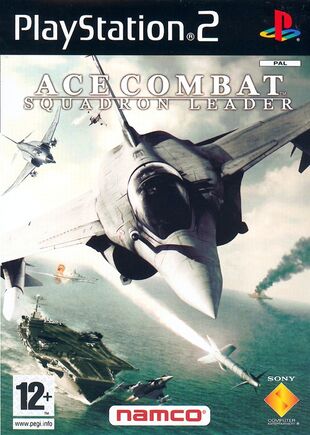
Starting with the top, Keiki Koboyashi, is the main cook in question. He offers us with some enjoyable appetizers, Briefing I and Hangar I. The precedent leads with some funky bass and anthemic brass. It can give the feeling of taking flight, before entering the actual game.
Hangar is also just hip, in that it welcomes the player with warm feelings, just before they get shot down. Shorebirds takes charge with its cinematic opening. Open War is the more darker than the previous. Both feel like tutorial music, and thus accurately placed on the CD.

The real food is now served to us with Naval Blockade. Mature strings and brass fill the ears with delight. Amazing crash of the symbols and tense beats of the drums, make war seem like a good thing. First Flight is taken from Ace Combat 4 and rearranged here. Strings whistle at a high pitch, but I don't know if it does better than its electronic counterpart. Still, it does not hurt Koboyashi's lineup.
Rendevous opens up with some tensity, gains even more with speed, and the additions of a somewhat electronic beat, for about a minute, until it loops again with more emotional string and brass. Lit Fuse comes in crashing with the symbols and snare drums.
More strings are added and a nice touch of the triangle. After a minute of preparing orchestrations, Koboyashi takes flight with high pitched sweeping of the strings. He finishes his work on the first disc with Game Over. Light harps open up in Free Flight. Snare drums and violins follow in.
Heavier drums, symbols, and brass take charge for this patriotic theme. Supercircus just satisfies my taste buds. Action orientated with Takanori's rocking guitar.
Koboyashi's brass builds the intensity of the piece, making for a perfect combination. Into the Dusk falls more in line with Free Flight, but is a Waltz-esque approach. It slowly starts with brass and then piano. Key by key, note by note, Koboyashi touches the soul with this piano arrangement of the main theme.

And then ending this disc with Final Options. Coming back onto Disc 3, Keiki follows up with his first Briefing and Hangar themes. Though in the second Hanger begins more quietly, both are pure symphonic entree's.
Hangar arrangements us familiar to Jurassic Parks theme. Wings of Unity has an interesting beat, excellent violins, string, and brass compilation. Its not very different from the rest of his work, yet he manages to make each piece unique and independent. If Supercircus were stripped of its guitar and fused with Lit Fuse and his hip Briefing I theme, Dead Ahead would be the result.
The Unsung War is the main dish. If all of the above was not good enough, well this one accumulates all that Mr. Koboyashi has done thus far into one grand course. Powerful vocals seer through the ear, into the brain, and touches the soul. This track alone made Mr.
Keiki Kobayashi the star that he is. The Warsaw Philharmonic Orchestra performs both The Journey Home and Razgriz. Both feel like movie experiences. They are sweet and melodic. For me though, being true classical music, is not my favorite meal. Razgriz is like the 7 minute wonder, but without the lyrics.
From Razgriz and on, I assume, are all BGM's to the cut scenes. Open the War has some pace to it, but the rest are slow pieces, and they should be taken the time to listen to. However, other than the aforementioned piece, these short tracks are good to breeze through. 15 Years Ago is an excellent piano arrangement, that could get repeat plays. Blind Corridor is sleek and creepy. It stands out as one of my favorites for Keiki's last moments in this 4-disc collection.
There was a problem previewing Competence-at-Work-Spencer.pdf. United States Department of State.
It does burst out in the middle and then at the end. Fugitive Hope also starts out quietly, but gets down and dirty for whole entirity of it. There is surprisingly just as much tension and percussion in these last tracks as in the in-gameplay music. Mary Elizabeth McGlynn adds her voice to The Journey Home, this game's ending theme. The lyrics are precise, and she hits the notes accordingly, but the song doesn't reach to me. I'm more attracted to the radio version, vocalised by Elizabeth Ladizinsky.
It is uniquely engineered to start out as if it's coming from the radio back in WWII. Then gradually evolving into our modern day quality sound. Interestingly, and oddly, Puddle of Mudd's Blurry has been included. Never liked the song, but I guess its a nice add.
Nakatsuru finally does a song, well, at least a remix of Blue Skies. Originally done by Hiroshi Okubo, and appearing on the two preceeding OST releases. I did not like it at first, for it's jazzy tunes, but after a couple tries, Nakatsuru regains my respect. Some composers can't do songs as well as instrumentals. Speaking of Okubo, he contributes a few main game pieces and most of the arcade themes.
All his arcade themes are hip, funky, rocking, and the antithesis of the main game tracks. I'm kind of weary of the decision that King Records has made to put these fun tracks in together with Koboyashi's more serious cut scene music. Although, they probably had no better way to do it. Okubo's arcade themes, are not grand, but can be catchy and have the audience dancing. They are all equally addicting, with Elemental Particle 2 giving the most jolt of electricity. Although, he uses only instruments that a band would use, but that's what appeals to me most anyway.
Entirely new to me is Tetsukazu Nakanishi, who owns the first track, Title. It took some to get used to, but Nakanishi has opened my ears even more. He commands all of the enemy themes, which give off the more brash and clash then Kobayashi's themes. In Wardog, its does not stray far from the music director's style. Being one of the longer tracks on the first disc, it feels right at home as a tutorial theme.
Very welcoming and enjoyable. I think he does better than Kobayashi. Though, Tetsukazu lags behind in menu themes, for being less orchestral and more purely sounds. Four Horsemen is one of the more attractive offerings that Nakatsuru-san has, and it's certainly the more brighter ones. Hints of espionage acoustics, funky bass and electric guitar. From start to finish, and the middle interlude with the brass, just make the earbuds melt in. Reprisal is a five minute glory, that encapsulates all of Hollywoods grand themes into one track.
Takanori's guitar skills work symbiotically with Nakatusuru's brass. The final minute's tearing oboe bring aesthetics back to music. Above is a link to the composers commentary. Nakanishi doesn't have much to say, or rather, want to say. He's probably mad that he lost the director's position. They all have some sort of enthusiasm toward the project.
Though, I find it weird to hear of Nakatsuru's cats and dogs. Junichi points out correctly, that each composer's style had a chance to shine. Namco always manages to package their discs well. Completely the opposite of Nintendo. Just the four disc compilation is enough to dish out $50. The booklet is just as hard as the case.
Flipping through the pages is a cinch, and no need to bend the book. Texts, color, and layout are all done just right. Commentary is the only extra, if that counts as any. They could have at least had English translations. Package: 8/10 Yes, I made the right choice to buy this CD and venture out from my little circle of composers.
Each one here has a happy home on my hard drive. It took me a year to accustomed to their work. There is not one composer that I cannot prefer over the other here.
Having not played the game, I don't see any track here that does not work outside the game. Although there are some tracks that are passable and filler, but there are plenty to keep busy with and most likely repeat over and over. There is no reason to miss out on this compilations, and at a fair price. Original prints are still available just about everywhere. Is filled with tons of them. I am a proud owner of this CD and the successors as well, with reviews coming up eventually. Though I need to try and get the previous.