Marilyn Manson Holy Wood Rar
. ' Released: November 7, 2000. ' Released: February 2, 2001. ' Released: October 6, 2001 Holy Wood (In the Shadow of the Valley of Death) is the fourth studio album by American band. It was released on November 11, 2000 by and. A, it is the final installment of a that also included (1996), and marked a return to the style of the band's earlier work, after the -influenced production of (1998).
After its release, the band's said that the overarching story within the trilogy is presented in reverse chronological order: Holy Wood, therefore, begins the narrative. In the aftermath of the on April 20, 1999, mainstream media widely reported that its perpetrators were wearing the band's T-shirts during the rampage, and had been. As their first release after the massacre, the record was Manson's rebuttal to the accusations leveled against him and the group, and was described by the vocalist as a 'declaration of war'. It was written in the singer's former home in the and recorded in several undisclosed locations, including and. His ambitions for Holy Wood initially included an eponymous film exploring its backstory—a project which has since been abandoned and was modified into the as-yet-unreleased novel.
Holy Wood (In the Shadow of the Valley of Death) is a industrial metal music album recording by MARILYN MANSON released in 2000 on. Marilyn Manson - Holy Wood (In the Shadow of the Valley of Death) Album Sampler (Holy2) (2000) MP3 320 kbit/s rar and zip.
The album was released to generally positive reviews. Several writers praised it as the band's finest work, and multiple publications ranked it as one of the best albums of 2000.
British rock magazine went on to include it on its list of the best albums of the decade. In the US, Holy Wood was not as commercially successful as the band's preceding records, debuting at number 13 on the. However, it became their most successful album internationally, debuting in the top twenty of numerous.
It was certified gold in several countries, including Canada, Japan, Switzerland and the UK. Three singles were released from the record: ', ' and ', and the band embarked on the worldwide. In 2010, Kerrang! Published a 10th-anniversary commemorative piece in which they called the album 'Manson's finest hour. A decade on, there has still not been as eloquent and savage a musical attack on the media and mainstream culture. It is still scathingly relevant and a credit to a man who refused to sit and take it, but instead come out swinging.'
1999 was a pivotal year—as was 1969, the year of my birth. The two years share many similarities. Became an of its own. Columbine became the of our generation. Things happened that could've made me want to stop making music. Instead, I decided to come out and really punish everyone for daring to fuck with me. I've got a big fight ahead of me on this one.
And I want every bit of it. —Marilyn Manson In the late 1990s, and his established themselves as a household name, and as one of the most controversial rock acts in music history. Their albums (1996) and (1998) were both critical and commercial successes, and by the time of their in 1999, the frontman had become a iconoclast and a rallying icon for alienated youth. As their popularity increased, the confrontational nature of the group's music and imagery outraged. Numerous politicians lobbied to have their performances banned, citing false and exaggerated claims that they contained animal sacrifices, bestiality and rape. Their concerts were routinely picketed by religious advocates and parent groups, who asserted that their music had a corrupting influence on youth culture by inciting 'rape, murder, blasphemy and suicide'.
On April 20, 1999, students shot dead 12 students and a teacher and wounded 21 others, before committing suicide. In the aftermath of the, the band were; early media reports alleged that the shooters were fans, and were wearing the group's T-shirts during the massacre. Although these claims were later proven to be false, speculation in national media and among the public continued to blame Manson's music and imagery for inciting Harris and Klebold. Later reports revealed that the two were not fans—and, on the contrary, had disliked the band's music. Despite this, Marilyn Manson (as well as other bands and forms of entertainment, such as movies and video games) were widely criticized by religious, political, and entertainment-industry figures. Under mounting pressure in the days after Columbine, the group postponed their last five North American tour dates out of respect for the victims and their families. On April 29, ten US senators (led by of Kansas) sent a letter to – the president of (the owner of Interscope) – requesting a voluntary halt to his company's distribution to children of 'music that glorifies violence'.
The letter named Marilyn Manson for producing songs which 'eerily reflect' the actions of Harris and Klebold. Later that day, the band canceled their remaining North American shows. Two days later, Manson published his response to these accusations in an piece for, titled 'Columbine: Whose Fault Is It?' , where he castigated, the political influence of the, and the media's irresponsible coverage, which he said facilitated the placing of blame on a, instead of debating more relevant societal issues.

On May 4, a hearing on the marketing and distribution of violent content to minors by the television, music, film and video-game industries was held by the. The committee heard testimony from ' (such as and the Archbishop of Denver, ), professors and mental-health professionals. Speakers criticized the band, its label-mate, and the 1999 film for their alleged contribution to a cultural environment enabling violence such as the Columbine shootings. The committee requested that the and the investigate the entertainment industry's marketing practices to minors.
After concluding the European and Japanese legs of their tour on August 8, the band withdrew from public view. The early development of Holy Wood coincided with Manson's three-month seclusion at his home in the, during which he considered how to respond to the controversy. Manson said the maelstrom made him re-evaluate his career: 'There was a bit of trepidation, in deciding: 'Is it worth it? Are people understanding what I'm trying to say? Am I even gonna be allowed to say it?' Because I definitely had every single door shut in my face.
There were not a lot of people who stood behind me.' He told that he felt his safety was threatened to the point that he 'could be.' He began work on the album as a counterattack. Recording and production Several of the tracks that appear on Holy Wood date back to 1995, prior to the release of Antichrist Superstar, although much of this material consisted of 'scattered ideas'. Manson, the band's vocalist, developed this material into more substantial compositions during a three-month period of seclusion in his attic.
Following this, the full band worked for a year on re-writing and developing the material. The record is the group's most collaborative effort to date; all members contributed to the songwriting process. Most of the compositional work was done by Manson alongside guitarists and. The vocalist contrasted his songwriting sessions between the two, calling sessions with the latter 'very focused', saying that most of their compositions would be completed before being taken to the rest of the band for consideration.
In contrast, his sessions with Ramirez were less demanding, and the pair frequently experimented with. Drummer worked constantly on new material, and is credited with performing and, while keyboardist provided input on 'President Dead' and 'Cruci-Fiction in Space'. Altogether, the band wrote 100 musical fragments, of which between 25 and 30 became songs. Stylized version of the for, used by the band as a logo for the album and the character of Band members maintained a low profile during the album's recording. Manson indicated that their would be their 'only contact with humanity' during this period. The album was recorded at several locations, including, Manson's home in the Hollywood Hills, and 's in. Locations were chosen for the atmosphere they were intended to impart to the music, and the band visited Death Valley a number of times to 'imprint the feeling of the desert into their minds', and to avoid composing artificial-sounding songs.
Manson co-produced the album alongside, while of group is credited with programming and pre-production editing. Experimental sound effects and acoustic songs were recorded using. Harris' programming skills would prove invaluable during the recording process, as he would take the natural sounds the band had been recording and reconstruct them into processed background effects.
Marilyn Manson Holy Wood
Manson also explained that the acoustic songs were 'acoustic' in the sense that they were not recorded with electronic instruments, but he said the album's sonic landscape would be 'intrinsically electronic'. Manson announced on December 16, 1999, that the album was progressing under the In the Shadow of the Valley of Death, and that its logo would be the alchemical symbol for mercury. Expanding on the symbol's relationship to the album's concept, Manson said 'It represents both the and the, which has been associated with Adam, the first man.' The band spent considerable time at the Mansion Studio, where the bulk of Ginger Fish's live drumming would be recorded, with its cavernous rooms particularly suitable for recording percussion.
On February 23, 2000, Manson delivered a 20-minute lecture via satellite to a current-events convention, 'DisinfoCon 2000', aimed at exposing. Six days later, it was announced that their upcoming album had been re-titled Holy Wood (In the Shadow of the Valley of Death). By April, the album was in the final stages of recording, and Manson began posting footage of the band from the studio. Novel and film. Further information: Manson's ambitions for the project initially included an eponymous film exploring the album's backstory. In July 1999, he had reportedly begun negotiating with to produce and distribute the film and its soundtrack. At the in (where the band performed on November 11), he disclosed the film's title and his production plans.
Marilyn Manson Holy Wood Torrent
Manson met Chilean filmmaker at the event to discuss work on the film, although no final decision was made. By February 29, 2000, the deal fell through when Manson had reservations that New Line Cinema would take the film in a direction which would not have 'retained his artistic vision'. Abandoning his attempt to bring Holy Wood to the screen, Manson announced plans to publish two books accompanying the album. The first was a 'graphic and phantasmagoric' intended for release shortly after the album by (a division of ).
The novel's style was inspired by, and, and would be followed by a of images created for the project. In a December 2000 interview with Manson, novelist mentioned the Holy Wood novel (due for release in spring 2001) and complimented its style. Neither book has been released, reportedly due to a publishing dispute. Concept and themes. 'Holy Wood' – which isn't even that great of a hyperbole of America – is a place where an obituary is just another headline. Where if you die and enough people are watching, then you're famous. —Marilyn Manson, on the album's concept Manson described Holy Wood as a 'declaration of war.'
The album's plot is a, which he told was semi-autobiographical. While it can be viewed on several levels, he said its simplest interpretation is to see it as a story about an idealistic man whose revolution is commercialized, leading him to 'destroy the thing he has created, which is himself.' It takes place in a thinly-veiled satire of modern America called 'Holy Wood', which Manson described as a, city-sized amusement park where the main attractions are death and violence, and where consumerism is taken to its logical extreme. Its is 'Death Valley', which is used as a 'metaphor for the outcast and the imperfect of the world.' The central character is the protagonist —a name derived from the which means 'original man'. The story follows him as he goes in search of a better life out of Death Valley and into Holy Wood.
Marilyn Manson Holywood Free Download
Disenchanted by what he finds, he fashions a counterculture revolution, only to have it usurped and co-opted by Holy Wood's consumer culture, and he finds himself appropriated as a figure of Holy Wood's ideology of 'Celebritarianism': an ideology in which fame is the primary moral value of a religion deeply rooted in celebrity worship and martyrdom; where, and is idolized as the contemporary. Holy Wood's religion parallels Christianity, in that it juxtaposes the dead-celebrity phenomenon in American culture with the. The phrase 'guns, god and government' is repeated multiple times throughout the album.
It is suggested that these are the root cause of violence, and the album examines the role played in the Columbine massacre: specifically their advocacy of gun culture, the inadequacies of traditional family values, the inclination of the toward war-mongering, and the toward moral panic. This glorification of violence within mainstream American culture is the central theme of the record. A substantive portion of the record analyzes the cultural role of Jesus Christ, specifically Manson's view that the image of his crucifixion was the origin of celebrity.
Manson said that while his previous work argued against the Bible's content, for the purpose of Holy Wood, he instead looked for things in the Bible to which he could relate. He developed an opinion that Christ was a revolutionary figure—a person who was killed for having dangerous opinions, and whose image was later exploited and merchandised for financial gain by entities such as.
Christ's death is also compared to 's of the, which Manson called 'the only thing that's happened in modern times to equal the crucifixion.' He watched the clip many times as a child, and said it was the most violent thing he had ever seen. Is also referred to on the album as an. While recording Holy Wood, Manson was drawn to ' 1968, due to its alleged role in inspiring the, and the parallels he observed between that incident and Columbine, saying: 'To my knowledge, it's the first rock n' roll record that's been blamed and linked to violence. When you've got ' taken from the written in blood on someone's wall, it's a little more damning than anything I've been blamed for.' Composition and style The record is primarily an album, although it has also been described as, and.
The vocalist claimed in a pre-release interview with that the album would contain some of the material the band had recorded to date. Holy Wood combines the -influenced production of Mechanical Animals with the soundscape of the band's earlier work. He also called the record 'arrogant, in an sense' and said that, as a result of the lyrical content, most of the songs contained three or four distinct parts, although the band took great care to avoid being 'self-indulgent'.
He also said that the record was intended to be the ' White Album', and that he wrote Holy Wood in the same house where wrote their 1970 single '—another source of inspiration. Like Antichrist Superstar before it, Holy Wood uses a structure, dividing the album into four movements. These movements are titled A: In the Shadow, D: The Androgyne, A: Of Red Earth, and M: The Fallen. Manson described the record as 'the final piece of a triptych that I began with Antichrist Superstar.' Despite being the last of the three albums to be released, Manson explained that the triptych's storyline takes place in reverse chronological order; Holy Wood began the story, and Mechanical Animals and Antichrist Superstar were sequels. The storyline unfolds in a multi-tiered series of metaphors and allusions; for example, the album's title refers not only to the, but also to 'the tree of knowledge that Adam took the first fruit from when he fell out of paradise, the wood that Christ was crucified on, the wood that Lee Harvey Oswald's rifle is made from, and the wood that so many coffins are made of.' 'The Love Song' applies dark humor to satirize America's concept of traditional family values by drawing parallels to its love affair with guns and violence.
Problems playing this file? 'GodEatGod' is the first song on the record, and follows Adam as he meditates in the desert. 'The Love Song' was described by Manson as an ode to Celebritarianism, and its title originated from his observation that 'Love Song' is one of the most common titles in music. The lyrics are composed around an elaborate metaphor about guns.
Manson explained: 'I was suggesting with the lyrics that the father is the hand, the mother is the gun, and the children are the bullets. Where you shoot them is your responsibility as parents.' The chorus is a rhetorical take on a popular American: 'Do you love your God, gun, government?' Described ' as a 'playground punk anthem', and Manson revealed that its theme is Adam's desire to be a part of Holy Wood, saying that it is about 'a person who's grown up all his life thinking that the grass is greener on the other side, but when he finally gets there, he realizes that it's worse than where he came from.' ' is a 'signature Marilyn Manson song' with a bouncing guitar riff composed of. Its lyrics juxtapose the disenfranchisement of contemporary youth with the revolutionary idealism of their parents' generation.
The Beatles' influence is evident in this song; the chorus echoes the disillusionment of the White Album's '. Manson singled out 'Target Audience (Narcissus Narcosis)' as his favorite song on the album, and said that it describes every person's desire for. Borrowing a riff from English band, 'President Dead' is a guitar-driven song showcasing John 5's technical skills. It opens with a sample of 's broadcast announcing the death of John F. The song is 3:13 long, which is a deliberate numerological reference to 313 of the Zapruder film—the frame displaying the impact of the fatal head shot which killed Kennedy.
'In the Shadow of the Valley of Death' is an introspective song with Adam at his most emotionally vulnerable. 'Cruci-Fiction in Space' further explores the Kennedy assassination, concluding that human beings have evolved from monkeys to men to guns. 'A Place in the Dirt' is another personal song, characterized by Adam's self-analysis of his place in Holy Wood.
' is a mournful, elegiac dirge with a harpsichord and synthesized-drum. The verse 'Today I am dirty and I want to be pretty, tomorrow I'll know that I'm just dirt' has an -style vocal delivery, building to the adrenaline-fueled chorus. Noted that the song could be interpreted as a tribute to the Columbine shooters, but its point was not to glorify violence; rather, it was to depict a society drenched in its children's blood. 'The Death Song' is the turning point for Adam; he no longer cares. Manson described it as sarcastic and nihilistic: 'it's like 'We have no future and we don't give a fuck'.' Described it as one of the album's heaviest songs. 'Lamb of God' sees Manson criticizing his accusers for turning tragedy into televised spectacle, using the assassinations of JFK and John Lennon as examples.
Problems playing this file? The of 'Lamb of God' paraphrases the chorus of ' (from 1970's ), whose lyric 'Nothing's gonna change my world' inspired the song.
Manson elaborated that: ' came along and proved him very wrong. That was always something growing up that was very sad and tragic to me'.
The song uses the assassinations of JFK and John Lennon to criticize the media's veneration of death, and for turning tragedy into televised spectacle. 'Burning Flag' is a heavy-metal song reminiscent of American industrial metal band. The album ends with an interlocking group of songs: 'Valentine's Day', 'The Fall of Adam', 'King Kill 33°' and 'Count to Six and Die (The Vacuum of Infinite Space Encompassing)' each end abruptly before being instantaneously followed by the intro of the proceeding track. The final song concludes on a; it ends with the sound of the of a being spun repeatedly. Its is cocked six times, although its is pulled only five times. The result of the sixth and final chamber being fired is not included.
Release and artwork Manson posted a four-minute video clip on the band's website on December 16, 1999, featuring clips of two previously unreleased songs. The first clip was of a rock song which later became 'Disposable Teens', while the second was a rough of a cover of and 's 1953 single 'The Little Boy and the Old Man' (composed by a year earlier as 'Little Child'; it was most popularly performed under the title 'Mommy Dear' in the 1964 movie ).
As a gift for fans, Manson posted a download of the band's cover of Charles Manson's 'Sick City', from his 1970 album. In August, he announced an October 24 release date for the record, and posted a partial track listing containing 13 song titles, while also indicating that their website would be updated weekly. Within three weeks, the album's full track listing had been revealed, and sound files of 'Burning Flag', 'Cruci-Fiction in Space' and 'The Love Song' had been released for free download, along with the cover of the Holy Wood novel. On September 18, Manson announced that the album's US release would be postponed until November 14 (to fine-tune the final mix), and that its first single would be 'Disposable Teens'. The album was released on three formats on November 13 in the UK by and Interscope Records.
Versions of the edition released in the UK featured an acoustic version of 'The Nobodies' as a bonus track, while Japanese editions also included a live version of 'Mechanical Animals'. The album was released on - and. Released a version of the album on (SHM-CD) on March 23, 2013. The image was supposed to suggest that something we've taken for granted all our lives can be looked at as violent and sexual as well. So religious people who indict entertainment as being violent, it's kind of ironic because Christ was the first celebrity and all entertainment comes from religion. And my jaw being removed is to represent the silencing of people with dangerous opinions.
—Marilyn Manson, on the controversial album cover. Artwork for the album was designed by Manson and.
Manson began conceptualizing it as he wrote the songs, and Brown and Manson worked in tandem to realize the imagery after deciding to do the work themselves. The cover art, which portrays Manson as a crucified Christ with his jawbone torn off, is intended as a criticism of censorship and America's obsession with martyrs. It is a cropped reinterpretation of card. Underneath is an obscured portion of John F. Kennedy's coroner report, displaying the words 'clinical record' and 'autopsy'. The typeface used on the band's name is the same font used on the logo in the 1960s.
The cover was controversial; editions of the album sold at came housed in a cardboard sleeve featuring an alternate cover, while and refused to stock the album at all. A pastor in Memphis, Tennessee threatened to go on a unless the album was pulled from shelves. Manson described these actions as attempts at censorship: 'The irony is that my point of the photo on the album was to show people that the crucifixion of Christ is, indeed, a violent image. My jaw is missing as a symbol of this very kind of censorship. This doesn't piss me off as much as it pleases me, because those offended by my album cover have successfully proven my point.' In 2008, ranked it at number ten on their list of 'The 50 Most Controversial Album Covers of All Time'.
A set of fourteen redesigned tarot cards, based on the, were commissioned by the singer for the album's artwork. The cards depict band members in tableau. Each card was reinterpreted to reflect the iconography of the album's lyrical content: is stepping off a cliff, with grainy images of and a JFK campaign poster in the background;, with prosthetic legs, is sitting in a wheelchair clutching a rifle in front of an American flag; weighs the Bible against the brain on his balance scale. The album's inner sleeve contains these three images, along with a further nine:, and. The cover itself represents The Hanged Man. Promotion and singles Three singles were released to promote the album, with 'Disposable Teens' being released as its. The band made their debut appearance on 's to perform the song.
Its music video was directed by, which debuted on 's on October 25. The single was released in the UK on November 6, and featured several B-sides, including covers of Lennon's ' and ' ', as well as original tracks 'Diamonds & Pollen' and '. The latter had been released the previous year on the to. The band performed 'Disposable Teens' on the Eve celebration in 2000, along with a cover of 's '.
It was also performed at the. From November 1, the UK division of Interscope held a contest to promote the album.
The contest invited fans to log onto the band's website daily to pick up a series of coded clues which led to a hidden message. Fans who solved the riddle received an exclusive download, and were entered into a drawing for a one-week trip for two to meet the band in Hollywood. On November 14, the band took a break from the Guns, God and Government Tour to celebrate the album's US release date with a brief, invitation-only acoustic set at the Saci nightclub in. Tickets for the show were given out via their website, in radio contests, and to the first 100 album buyers at on Broadway in New York. The set consisted of four songs, including their cover ' – the theme of the film (and ) – which they had recently contributed to the of. The following day, the vocalist appeared on Total Request Live in a segment entitled 'Mothers Against Marilyn Manson'. 'The Fight Song' was released as the album's second single on February 19, 2001 in the UK.
A of the song by of appeared as its B-side. Its music video was directed by Manson and and sparked controversy for its violent depiction of an game between and, with accusing it of being exploitative of the Columbine tragedy. Manson dismissed the claims as hype, and said: 'I'm trying to show that sports as well as music can be seen as violent, so I chose a traditional black vs white, good vs evil theme for the video.' Manson appeared on an April 2001 episode of, where he once again denied that the band's music was responsible for Columbine. Argued that 'disturbed kids' without direction from responsible parents could misinterpret the message of his music as endorsing the belief that 'when I'm dead then everybody's going to know me.' Manson responded: Well, I think that's a very valid point and I think that it's a reflection of, not necessarily this programme but of television in general, that if you die and enough people are watching you become a martyr, you become a hero, you become well known.
So when you have these things like Columbine, and you have these kids who are angry and they have something to say and no one's listening, the media sends a message that says if you do something loud enough and it gets our attention then you will be famous for it. Those kids ended up on the cover of magazine twice, the media gave them exactly what they wanted. That's why I never did any interviews around that time when I was being blamed for it because I didn't want to contribute to something that I found to be reprehensible.
In mid-2001, was criticized for airing commercials promoting the album during episodes of Total Request Live. Manson suspected that former played a role in the criticism. Lieberman and had recently introduced the Media Marketing Accountability Act before the. This legislation proposed to ban the entertainment-industry from marketing suspected violent or explicit material to minors. Manson announced prior to the release of 'The Fight Song' that 'The Nobodies' would be issued as the album's third single, whilst indicating a desire to film its video in Russia because 'the atmosphere, the desolation, the coldness and the architecture would really suit the song.' Another early plan was to incorporate the MTV series, as the song was included in the show's soundtrack. The idea was later abandoned, however, when the show drew the ire of Lieberman.
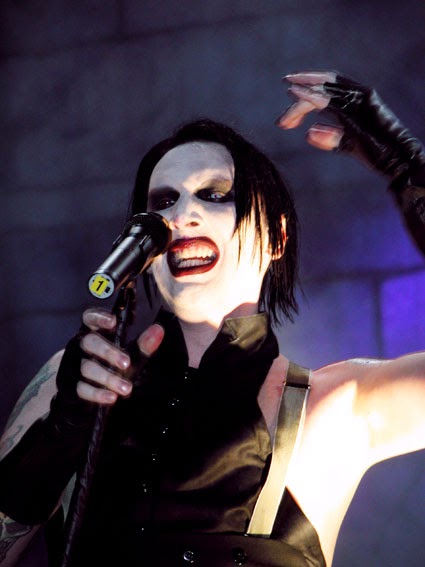
The music video was directed by and premiered on MTV in June, and the single was released in the UK on September 3. Its release was timed to coincide with the band's appearance at the, and was accompanied by another competition on the band's website—the winner was awarded two full-weekend passes to the festival, as well as unrestricted backstage access and a private sleeping area. A remix of the song later appeared in the 2001 film. Further information: The album was promoted by the worldwide Guns, God and Government Tour, which began in North America in 3–6,000-capacity venues on October 27, 2000 at the in. Typically for the band, the concerts were highly theatrical.
The tour's imagery was mainly derived from the concept and themes found on the album; its logo was a rifle, with handguns arranged to resemble the Christian cross. Sets were designed with, religious and 'celebritarian' imagery. Manson had a number of costume changes during each show: a bishop's and (often confused with ); a costume made from animals (including made from a horse's tail and a shirt made from skinned goat heads and ostrich spines); his signature black leather, and; an elaborate -style imperial; an peaked police cap; a black-and-white fur coat, and a large conical skirt which lifted him 12 metres (39 ft) in the air.
The leg of the tour marked the band's first performance in (on June 22, 2001 at ) after the Columbine High School massacre in Littleton. After initially canceling due to a scheduling conflict, the band changed their plans to play the Denver date. The group's decision met resistance from conservative groups; Manson received death threats and demands to cancel the band's performance.
A group of church leaders, businesses and families related to Columbine formed an organization opposing the show. Citizens for Peace and Respect, which was supported by and, claimed on their website that the band 'promotes hate, violence, death, suicide, drug use, and the attitudes and actions of the Columbine killers'. In response, Manson issued a statement: I am truly amazed that after all this time, religious groups still need to attack entertainment and use these tragedies as a pitiful excuse for their own self-serving publicity. In response to their protests, I will provide a show where I balance my songs with a wholesome Bible reading. This way, fans will not only hear my so-called, 'violent' point of view, but we can also examine the virtues of wonderful 'Christian' stories of disease, murder, adultery, suicide and child sacrifice. Now that seems like 'entertainment' to me.
Two films of the concert tour were made. The DVD was released on October 29, 2002 by, and featured live footage taken from several different performances in Los Angeles, Russia, Japan, and throughout Europe. It also included a 30-minute behind-the-scenes featurette, The Death Parade, with guest appearances from and.
This was followed seven years later by a titled Guns, God and Government – Live in L.A. Released by Eagle Rock on November 17, 2009, it depicts the band's entire sixteen-song set from their January 13, 2001 performance at the —the final headlining show of the North American leg of the tour.
Critical reception Professional ratings Aggregate scores Source Rating 72/100 Review scores Source Rating 10/10 B Holy Wood received generally positive reviews from music critics at the time of its release. At, which assigns a rating out of 100 to reviews from mainstream critics, the album received an score of 72 based on 14 reviews, indicating 'generally favorable reviews', and is the 88th best-reviewed album of the year. The record was praised by several publications as being the band's finest work: of described it as their definitive record; a writer for called it their 'most potent effort yet', and April Long of said it was 'by far the best thing Manson has ever set his warped mind to, it ultimately inspires something far more potent than fear or hatred—respect.'
The band received acclaim for the quality of their songwriting. Daniel Durchholz of called Holy Wood their most ambitious and musically accomplished record to date. Said that 'almost all of the songs contain a double-take chord change or a textural overdose or a mind-blowing bridge, and they'll be terroristic in concert.'
Praised the band for their inventive, and said that ' Holy Wood is a far better record than many would have dared to expect.' Rated the album 10 out of 10 and praised the band's performance, saying that they 'play tighter than ever before (looking at the credits show it to be much more of a team effort). And, musically, it has a lot more variation and scope than the of the world.' The band's vocalist was also applauded for his lyricism; Barry Walters of commended him for 'addressing real-life issues with a theatrical verve and genuine vitriol that no other mainstream act can match.'
Magazine was similarly impressed, calling Manson one of the most skilled lyricists of his generation. Editor Christopher Scapelliti compared his lyrics to those of John Lennon's, writing: 'What comes across loudest on the album is not the music, but the sense of injury expressed in Manson's lyrics. Like, Holy Wood screams with a primal fury that's evident even in its quietest moments.' The album also received some mixed reviews. Several publications criticized its length, as well as the band for abandoning the glam rock-influenced production of Mechanical Animals.
Argued that the album was too long, and claimed it would have been a more consistent record if subject matter was addressed literally, instead of through a 'concept album' format. Joshua Klein of rated Holy Wood a B–, but was overall critical of the lack of glam rock-influenced songs on the album., in a review for the, was also disappointed that the album did not live up to 'the promise of Mechanical Animals'. He viewed the musical cross-pollination of Antichrist Superstar and Mechanical Animals as confusion on the band's part as to which of the two albums appealed most to casual listeners. Manson.
Ramirez. 4:41 Total length: 76:23 Notes. editions of the album contain a of a video titled 'Autopsy'. Personnel Credits adapted from the liner notes of the vinyl edition of Holy Wood (In the Shadow of the Valley of Death).